In the fields of industrial automation, smart manufacturing, and precision testing, the selection of force sensors directly determines the measurement accuracy and operational reliability of the entire system. S-type load cells, with their compact structure, easy installation, and ability to measure both tension and compression, have become one of the most widely used force sensing elements. This article takes Naturoll’s S-type load cell product line as an example, covering product series analysis, key technical parameters, selection essentials, and pitfalls to avoid, providing you with a complete and practical reference for your selection process.
1. About Naturoll
Hefei Naturoll Intelligent Technology Co., Ltd. is a high-tech enterprise specializing in the development and sales of sensors and related equipment. Its main products include force sensors, transmitters, control instruments, electronic scales, and more. These products are widely used in industrial automation production lines, robotics, automotive, aerospace, medical, food, metallurgy, and many other fields. The company holds over 50 patents, operates in 15 countries, and places innovation, quality, and sustainable development at its core.
Naturoll’s force sensor product line includes spoke-type, ring-type, threaded rod-type, micro compression-type, and S-type tension/compression sensors. Among these, the S-type series is highly favored by engineers for its compact precision and wide range of capacities.
2. What is an S-Type Load Cell?
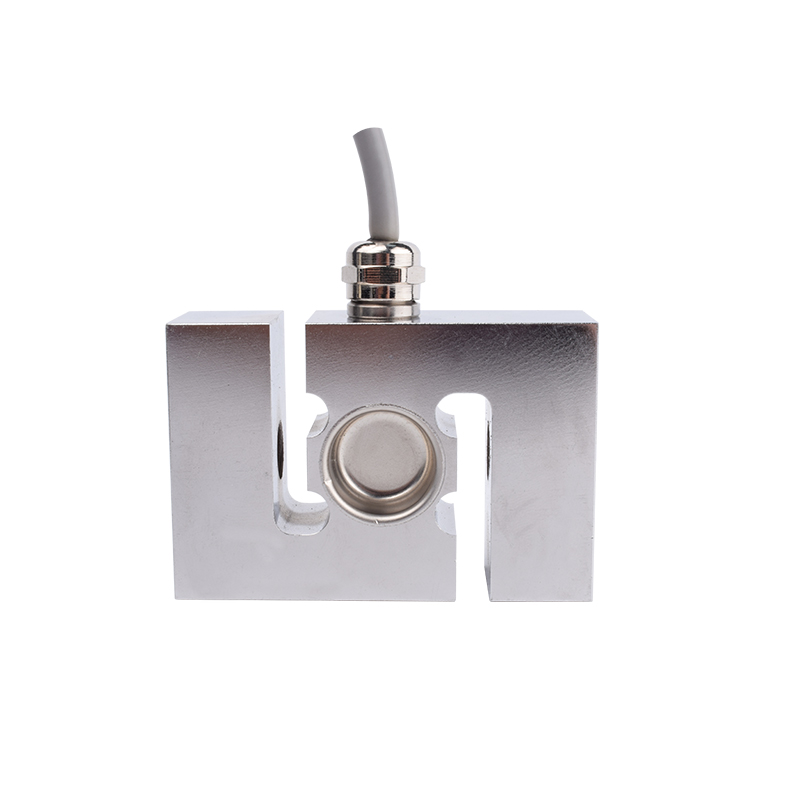
An S-type load cell is named for its elastic body structure shaped like the letter “S”. It usually has threaded holes at both ends, making it easy to install in series along the force path. Its most outstanding feature is bidirectional measurement– it can measure both tension and compression, offering strong adaptability.
The core working principle of an S-type sensor is strain gauge-based force measurement: when force is applied, the elastic body deforms slightly, and the resistance strain gauges attached to it deform accordingly. Their resistance changes, and through a Wheatstone bridge, this change is converted into a corresponding voltage signal output.
3. Main Naturoll S-Type Force Sensor Models
Naturoll currently offers several S-type force sensor models covering a wide range from 0.2g to 2000N. Below is a detailed introduction to the main models.
3.1 NF301 – Miniature S-Type Force Sensor
The NF301 is the finest-range model in Naturoll’s S-type series, covering **1N, 2.5N, 5N, 10N, 20N, 50N, 100N, 200N, 300N, and 500N** – ten ranges in total. It has an output sensitivity of 2.0±10% mV/V, is made of stainless steel, and is very compact, making it ideal for force measurement in confined spaces.
Typical applications: Micro-force testing, material mechanical property testing, precision assembly force monitoring.
3.2 NF302 – Micro S-Type Tension/Compression Sensor
The NF302 also covers a range of 1–500N, but unlike the NF301, it features threaded holes at both ends for easy in-line installation. Depending on the capacity, it uses M3 or M4 threads. Its external dimensions are even more compact.
Typical applications: Cold/hot press testing machines, small tensile test stands.
3.3 NF302B – S-Type Sensor with M6 Threads
The NF302B extends the capacity range to 10kg, 20kg, 50kg, 100kg, and 200kg (approx. 100N–2000N) and features M6 threaded holes, providing a more robust installation suitable for medium-load tension/compression measurements.
3.4 NF302L – Ultra-High Precision S-Type Sensor (200g/500g)
The NF302L has the smallest capacity in Naturoll’s S-type family – only 200g and 500g. Its output sensitivity is 1.0±10% mV/V or 2.0±10% mV/V, and it weighs only 0.1kg.
Typical applications: Precision weighing, extremely small force testing.
3.5 NF303 – High-Precision S-Type Tension/Compression Sensor
The NF303 covers capacities of 50N, 100N, 200N, 500N, 1000N, and 2000N, with an output sensitivity of 2.0±10% mV/V. It is positioned as a high-precision model, suitable for applications requiring higher measurement accuracy.